Showing posts with label President. Show all posts

Wednesday, December 22, 2010

Romania fumes at Franco-German Schengen blockade

Romanian President Traian Basescu lashed out at a decision by France and Germany yesterday (21 December) to postpone his country’s accession to the EU's border-free Schengen area, describing it as an act of "discrimination". The EurActiv network reports from Bucharest and Sofia. Speaking in the presidential palace in Bucharest, Basescu said his country would not accept discrimination from anyone, "be it from the most powerful countries of the EU". Hours before, the interior ministers of France and Germany, Brice Hortefeux and Thomas de Maizière, had issued a joint letter saying they would block Romania and Bulgaria's Schengen bid. According to the two ministers, not all conditions are met for the two countries to join the Schengen border-free area.

The two countries had initially planned to join the passport-free zone in March 2011.
"It would not be realistic nor responsible to neglect the deficiencies identified," says the letter, seen by EurActiv Romania. Among the deficiencies, the ministers specify "the absence of a satisfactory juridical and administrative environment in the fields of security and justice, persisting corruption at different levels and worrying levels of organised crime". Consequently, the ministers plead for a postponement of Romania and Bulgaria’s Schengen accession for a later date. "We consider that the decision should be taken when the main causes of worries would be removed and when the two countries would begin irreversible progress in their fight against corruption, of organised crime, as well as of reforming their judicial systems," the letter reads.

When Romania and Bulgaria joined the EU in 2007, they were placed under a special monitoring mechanism to assist them in reforming their juridical systems and combat corruption. In the case of Bulgaria, the fight against organised crime was highlighted as a particular problem. Since then regular reports have revealed only limited progress. However, the European Commission admits that there is no legal link between the Bulgaria and Romania's progress under the mechanism and their accession to the Schengen area. In his statement, Basescu said that Romania had met all technical requirements for joining Schengen and would not accept the introduction of "additional conditionalities". A Polish diplomat told EurActiv recently that his country was worried by attempts from older EU members to "change the rules" of the game and adopt "moving targets" that are difficult to be achieve for newcomers, citing Romania and Bulgaria's Schengen bid as a case in point. The diplomat also expressed worried that the permanent safety net for the euro zone could to raise the bar higher for countries that wish to adopt the common currency.




News source: EurActiv link: article

Wednesday, December 8, 2010

IMF Managing Director Visits Greece to Discuss Economic Developments

Managing Director Dominique Strauss-Kahn of the International Monetary Fund (IMF) today concluded his visit to Greece to discuss recent economic developments. Mr. Strauss-Kahn met with President Karolos Papoulias, Prime Minister George Papandreou, Finance Minister George Papaconstantinou, Governor of the Bank of Greece George Provopoulos, President of Parliament Philippos Petsalnikos, members of the Economic Affairs Parliamentary Committee, and the leader of New Democracy, Antonis Samaras. At the conclusion of his visit, Mr. Strauss-Kahn made the following statement:

“I greatly appreciate the opportunity to visit Athens and exchange views with the Greek authorities, members of parliament, and the opposition. I commend the efforts being undertaken by the Greek government and people to implement their ambitious reform program aimed at modernizing the economy, strengthening competitiveness, and restoring growth and employment. The IMF, alongside our European partners, is fully committed to support Greece’s efforts, including to help ensure that the economic program is socially well-balanced and fair, with protection for the most vulnerable in society.

“Much has been achieved in the six months since the program began, and more still needs to be done. Indeed, the next phase of structural reform is even more crucial to unlock the true potential of the Greek economy and the Greek people. This is not an easy task and it will take time for the various measures to take hold and produce full benefits. The progress made so far, however, offers a sound platform on which to build: the fiscal deficit is narrowing; public financial management and tax administration are improving; the financial sector is strengthening; pension reform is completed, and other reforms have begun—now is the time to implement and accelerate them. “This is a defining moment for Greece. While difficult challenges lie ahead, I am confident from my discussions here that the government and people are determined to do what it takes to ensure that Greece emerges from the crisis even stronger than before. I want to assure you that the IMF will do all we can to help Greece succeed.”


News source: IMF link: article

Thursday, December 2, 2010

EU-Russia summit to discuss 'strategy', WTO bid

Russian President Dmitry Medvedev is coming to Brussels next week (7 December) to discuss "strategy" with EU leaders, including the country's aspirations to join the World Trade Organisation (WTO). But a number of teething problems still remain on the agenda, judging from an internal EU document seen by EurActiv. Vladimir Chizhov, Russia's ambassador to the EU, said the summit would concentrate on "strategic things" such as the coordination of exit strategies from the economic crisis, climate change, positions regarding Iran's nuclear programme or the Middle East peace process.

The meeting, to be held on Tuesday (7 December), will see Medvedev meet European counterparts Herman Van Rompuy, the European Council president, and José Manuel Barroso, president of the European Commission. Towards an EU-Russia 'common market'. Speaking to journalists on Wednesday (1 December), Chizhov indicated that the Russian side was interested in discussing Prime Minister Vladimir Putin's proposal for a "harmonious community of economies from Lisbon to Vladivostok". The proposal, made during Putin's visit to Germany on 25 November, was dubbed an EU-Russia "common market" by the press. Chizhov said the first step would be for Russia to join the World Trade Organisation (WTO), which has been on the table for 16 years.
Then, Moscow and Brussels would sign a new EU-Russia basic treaty, replacing an antiquated Partnership and Cooperation Agreement signed in 1994. The third step, he said, was to start discussions about a free trade area.

German Chancellor Angela Merkel had expressed doubt about establishing a free trade area with Russia, saying that the initiative was "not timely", since Moscow was putting in place a customs union with its ex-Soviet neighbours Belarus and Kazakhstan. But Chizhov said that Merkel had not rejected the idea, insisting that the creation of the customs union did not contradict WTO rules and that each of the three countries would pursue individual WTO bids. The Russian envoy gave assurances that a range of outstanding problems, such as the EU's green light for Russia's WTO accession, would be sorted out at expert level, even before the leaders had met.


News source: EurActiv link: article

Tuesday, November 30, 2010

EIB opens Western Balkans regional office in Belgrade

The European Investment Bank (EIB) has opened a new regional representation office in Belgrade today. At the official inauguration ceremony the EIB was represented by its President, Philippe Maystadt and Vice-President, Dario Scannapieco who is responsible for operations in the Western Balkans; the Prime Minister, Mirko Cvetković and the Deputy Prime Minister, Bozidar Djelic were present for the occasion. “The opening of this office has significance in two respects today: on the one hand, to increase EIB activity in the region; on the other, to stress the commitment by European institutions to support your countries in joining the European Union” noted EIB President Maystadt. After the opening ceremony, three different loans totalling EUR 325 million were signed:

-Corridor X (E-80) Motorway phase I. EUR 195 million.
Construction of a new 36 km section of motorway on the Pan-European Corridor X in Serbia between Nis and Ciflik. The project is co-financed by the World Bank, EBRD and the Serbian Government.
-Belgrade City Sava Bridge. EUR 90 million.
Second tranche of 90 million of a EUR 160 million approved loan for the construction of access roads to the new Sava Bridge in the Serbian capital Belgrade. The first EUR 70 million tranche was signed last December. The project is co-financed by EBRD and the City of Belgrade.
-EPS electronic meters. EUR 40 million.
The project involves the replacement of around 5% of the existing obsolete electro-mechanic meters by digital meters integrated into a remote reading and connection/disconnection system within Elektroprivreda Srbije. The project is co-financed by EBRD and EPS.

“The EIB is one of the largest investors in the Republic of Serbia and since 2001 has supported projects in private and public sector with around 3 billion EUR. The Bank has financed very important projects in infrastructure, as well as energy but also education and health sector as well as the development of small and medium enterprises. The opening of the EIB regional office in Belgrade will further strengthen the relationship of Serbia and the EIB, while further support of this financial institution will help countries of the Western Balkans in fulfilling their strategic goals such as increase of competitiveness and accession to the EU", the Serbian Prime minister Cvetković said. “The three loans signed this morning confirm that the EIB is close to Serbia, to your municipalities and to the companies active in the region. An efficient infrastructure system is the backbone for the recovery and is essential to improving living conditions and economic standards of the population", noted EIB Vice-President Scannapieco.

“With the opening of its regional office in Belgrade, the European Investment Bank is confirming the clear European path of the Republic of Serbia. Moreover, after years of investing in our road and railway infrastructure, the Bank has now also recognised the goal of Serbia to become a knowledge-based economy. As a result of this, in 2010, the first €200 million for R&D infrastructure and an additional €50 million for education have been approved", noted the Serbian Deputy Prime Minister Djelic.


News source: EIB link: article

Monday, November 22, 2010

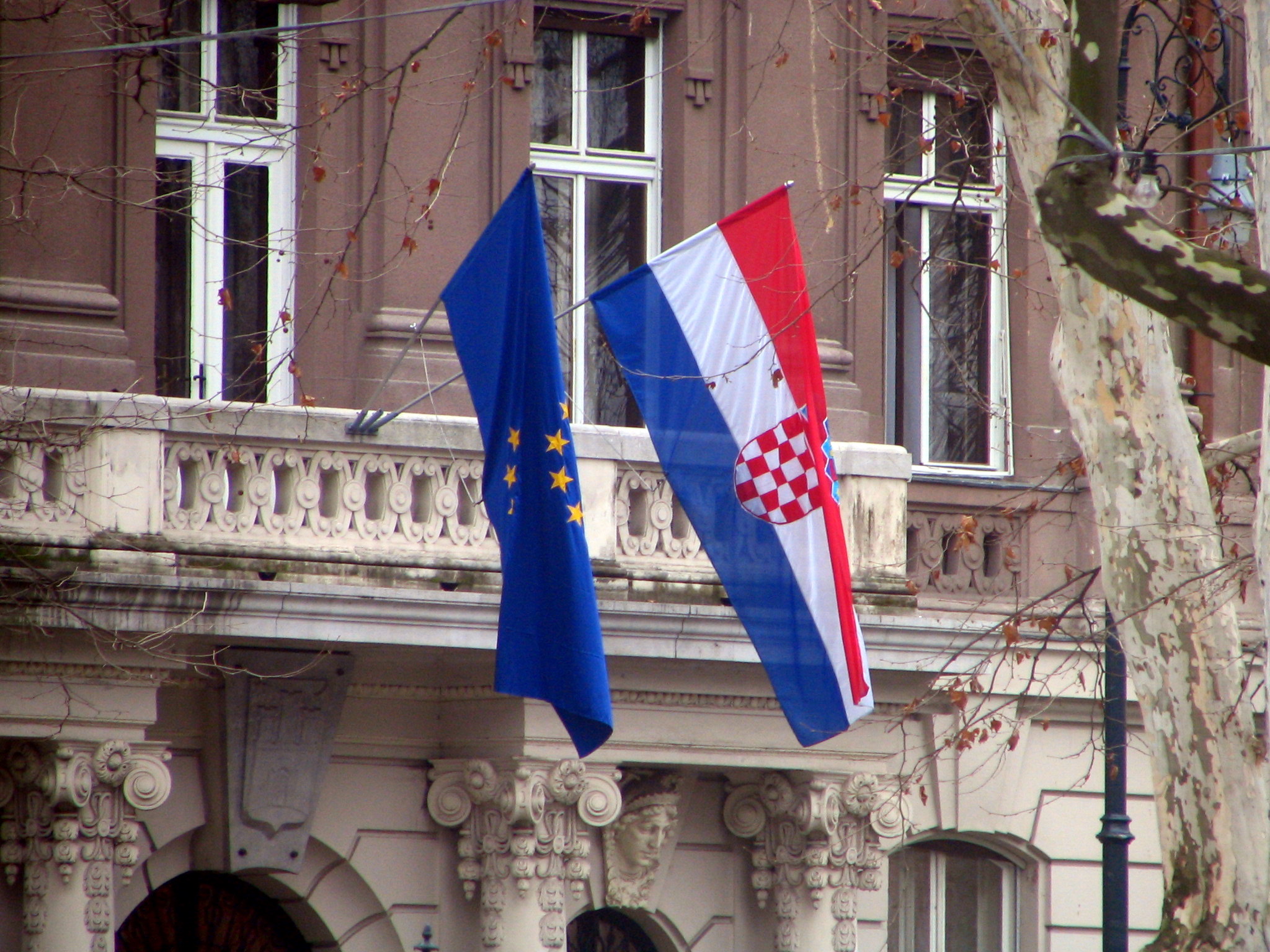
Croatia drums up public support for EU bid

The recent result of a survey revealing that Croatian citizens would have voted against European Union membership was unsurprising, according to president Ivo Josipovic. The Croatian foreign ministry is now working on an information campaign to try to win back popular support for the bid. The Gallup Europe poll, conducted in July, found that 43 percent of Croatian citizens would have voted No in a referendum on accession, compared to just 38 percent in favour. Just one quarter of citizens said EU membership was a "good thing". "The accession process is too long, everyday problems are burdening citizens and there are fears related to European regulations," Mr Josipovic said in response to the survey. Croatia's accession talks, which began in 2005, have been the longest of any EU candidate country to date. This is mainly due to domestic problems. Some analysts concluded that the answers to the Gallup Europe survey reflected the current economic crisis and the hardships of everyday life. However, the EU must share some of the blame. Croatia started negotiations at a sensitive moment, when France rejected the EU constitution, and after Bulgaria and Romania joined the union became more cautious about new members. 

The survey also revealed a paradox; the closer a country draws to joining the EU the less its citizens actually favour membership. Mr Josipovic's comments raised the fundamental question of how much Croats actually know about the EU. The government attempted to counter the dangers of ignorance and misunderstanding when it adopted communication strategies in 2001 and 2006. These were intended to inform the public about European integration. Information points and phone lines were set up, publications distributed and a ‘European Week' was announced, but none of these schemes proved particularly successful.

Andrej Plenkovic, state secretary for EU affairs in the ministry of foreign affairs and European integration, is now focusing his ministry's work on a new information strategy. "I already visited seventeen counties and in each of them we had presentations of issues of special interest for the people there – it could be agriculture or fisheries or something else. I was accompanied by people from other government bodies and agencies that deal with the EU. Around a hundred people attended each meeting and local media were hugely interested," Mr Plenkovic told WAZ.EUobserver. The real campaign is planned to take place before the referendum and will include TV and radio 

advertisements. Mr Plenkovic is confident that Croatian citizens will finally vote in favour of EU membership and he predicts a 65 percent approval rate. The ministry has already conducted its own survey with similar results: 62 percent for the EU, 33 percent against and five percent undecided.
But Vesna Pusic, vice-president of the Croatian People's Party (HNS) and president of the national committee for monitoring accession negotiations, is not as satisfied with the information campaign. "I think it should be, at this moment, more focused on concrete facts," said Ms Pusic. "We are in the final phase of negotiations so the government should tell the people when some of the EU regulations will take effect, what it means and what the consequences are. That would reduce people's fears." Ms Pusic is also confident that Croatian citizens will vote for the EU. "When it comes to the question 'Do we want to be Europeans?' Croats will say Yes."


News source: waz.euobserver.com link: article

Monday, November 15, 2010

Tadic: State bankruptcy prevented, better life in 2012


“The conclusion we can draw today is that the worst-case scenario - that of the country going bankrupt and becoming unable to meet its financial obligations - has been prevented,” Tadic said and pointed out that everything that the citizens had to go through during the crisis had to be endured for the sake of a better future. Serbian President and leader of the Democratic Party (DS) Boris Tadic stated on Saturday that a more visible growth in living standards can be expected in 2012.

At a session of the DS Main Board, Tadic assessed that the Serbian government could have achieved more, but that the most important achievement lies in the fact that thanks to the government's efforts, Serbia managed to escape the fate of many regional and European countries. “The conclusion we can draw today is that the worst-case scenario - that of the country going bankrupt and becoming unable to meet its financial obligations - has been prevented,” Tadic said and pointed out that everything that the citizens had to go through during the crisis had to be endured for the sake of a better future.

It is of utmost importance that Serbia does not overstep the limit of indebtedness, Tadic said and congratulated the government for preventing this from happening. “Overstepping the indebtedness limit would bring us short-lived benefits, but we would have to pay extortionate costs later on,” Tadic explained. According to Tadic, excessive indebtedness would boost popularity of the politicians in the leading coalition, but the burden of the economy's recovery from the crisis would pass on to the next generation. “I know that I will have to pay a steep political price for telling citizens the truth, but that is a price I am willing to pay,” Tadic stated.

News source: EMG.rs link: article

Friday, November 12, 2010

Tadic: Serbia's economic development is priority issue


Serbian President Boris Tadic has stated that as long as there is crisis, which every citizen is deeply experiencing, everyone has to be patient and there can be no bigger salaries for the authorities. "That is why as long as there is crisis and as long as I am the president, neither I nor the prime minister or any other minister will receive a bigger salary, and measures of saving in all state institutions will be even more rigorous. As far as other employed Serbian citizens, I completely agree that their salaries should increase in accordance with possibilities," Tadic stated in an interview for the Friday issue of the Belgrade-based daily Vecernje Novosti.

Tadic said that he is not completely satisfied with how the government is handling the economic crisis, even though "there is no doubt that, at one point, the government managed to prevent the economic breakdown that many other countries have suffered." "This is when a country admits that it is not able to fulfil its international financial obligations. Greece has experienced it, as well as Hungary, and many other countries. People nowadays live hard, but we earn as much as we produce. That was not the case earlier and we are paying the price now," Tadic said.

Assessing that the government could have done a lot more, Tadic said that the time behind us should have been used for significant improvements in agricultural production. "There should have been much more progress in infrastructure, and excuses such as that projects were late do not help, as it is obvious that the northern sections of Corridor 10 will not be built on schedule. The shortage of milk and oil is particularly disturbing for the citizens, as that reminds them citizens of the recent past, which is absolutely inadmissible. The work of inspection services and fight against corruption also prove that not enough effort is being made," Tadic stressed. He added that "someone will have to be held responsible, when this year ends and when the new budget is approved. All coalition partners have to take responsibility. There is simply no sector without problems and it is clear that they are not being solved fast enough. That is why we all have to find ways how to fix things."


News source: EMG.rs link: article

Wednesday, November 10, 2010

Syrian President pays visit to Romania on Wednesday and Thursday

Syrian President Bashar Al-Assad will pay a two-day visit to Romania on Wednesday and Thursday, to answer an invitation extended by his Romanian counterpart Traian Basescu, according to a release of the Romanian Presidential Administration. The Syrian high official's visit to Bucharest comes in the context of the 55th anniversary since the establishment of diplomatic ties between the two countries and also as a response to the visit of the Romanian head of state to Damascus, in October 2008.

On the occasion of this visit, President Bashar Al-Assad will have official talks with the Romanian head of state Traian Basescu, with Prime Minister Emil Boc and also with Speakers of the Senate and Chamber of Deputies. During the high level talks, there will be approached such issues related to the bilateral agenda as well as specific topics related to the Middle East, said the Presidential Administration.

According to the agenda of the Syrian official, the leader in Damascus will be accompanied in Romania by a delegation made up of the Syrian Minister of Foreign Affairs, Walid al-Moallem, presidential adviser on politics and media, Bouthaina Shaaban, and Minister of Economy and Trade, Lamia Assi.


News source: Actmedia link: article