Showing posts with label investment. Show all posts

Thursday, December 23, 2010

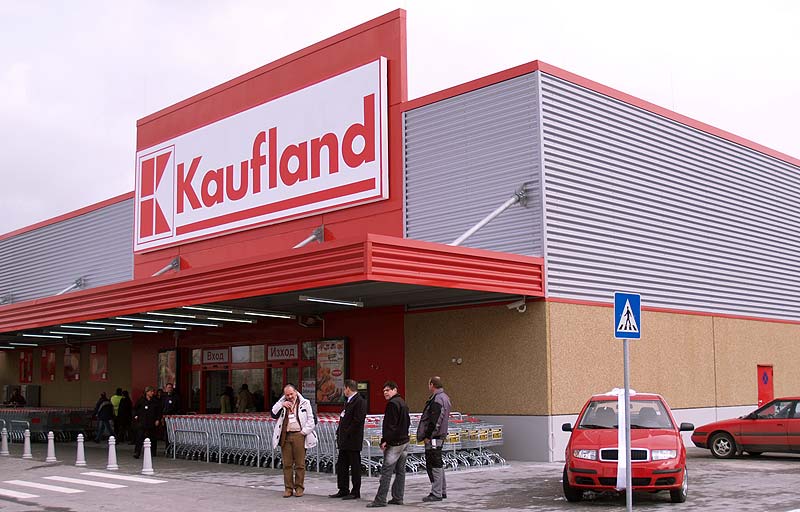
Bulgarian Minister Confirms Supermarket Fancies Science Academy Property

Bulgaria's Educational Minister Sergey Ignatov has confirmed that the German retailer Kaufland has an interest in purchasing a part of the Academy of Sciences' property. "I can not comment Kaufland's investment interests, since I do not work there," Ignatov said. "But we have received a letter from the company, expressing their ambition to acquire the property of one of the Academy's Institutes, which we firmly opposed."

He clarified that the letter has been received on January 18 2010, adding that copies have been sent to the Finance Minister Simeon Djankov and the Academy itself. The property in question belongs to the Institute of Metallurgy and Metal Sciences The Educational Minister was positive that a deal like that would be completely impossible. "I do not now how they have come up with something like that," he told the Bulgarian media on Thursday.

Recently, members of the Bulgarian Academy of Sciences have alarmed that the government plans to shut it down and sell its property. A wave of protests erupted in the institution in November as a result of the government's drastic budget cuts for science and research.


News source: Novinite.com link: article

Danilovgrad municipal infrastructure, financial and operational performance improvement programme

The Municipality of Danilovgrad (the "Municipality") is located in the valley of the Zeta River in central Montenegro, 16 kilometres northwest from the capital of Podgorica and 40 kilometres from Niksic, the second largest town in Montenegro. Danilovgrad town is the centre of Danilovgrad Municipality (population of 16,523).

The Municipality has been recognised by foreign and domestic companies as a good place for investments due to pro-business attitude of the local government management, cheap land, low municipal fees and proximity of Podgorica, which is the business and administrative centre of Montenegro. The Government of Montenegro will sign a loan with the European Bank for Reconstruction and Development (the "EBRD" or the "Bank") in an amount up to EUR 5.35 million. This loan will enable Public Utility Company Danilovgrad, ("PUC" or the "Company"), which is fully owned by the Municipality, to finance improvements in their water supply infrastructure and the development of wastewater collection and treatment in Danilovgrad.
While the Company is managed adequately, a number of operational problems persist: (i) high levels of technical losses due to prolonged under investment in the water supply infrastructure. (ii) high energy and maintenance costs of the water supply due to the poor physical condition of the water supply pipes. (iii) urgent need for rehabilitation of the water supply and construction of wastewater collection and treatment facilities.     
          
Technical Assistance for the development and implementation of a Financial and Operational Performance Improvement Programme ("FOPIP") will achieve the transition objectives of the Project and enhance commercial viability and administrative and managerial capacities of the Company.
Since the existing company will be split into two new companies : 1) water and wastewater company and 2) solid waste and other utility services by mid 2011, the Consultancy support will be provided to Water and wastewater company. The overall objective of the Assignment is to improve the Company’s operational efficiency and financial management in order to improve and strengthen its capacity to provide high quality water and sewerage services.

News source: EBRD link: article

Tuesday, December 21, 2010

EU and China to debate economic and trade issues at high level dialogue

The EU and China will hold their third High Level Economic and Trade Dialogue (HED) on 20 and 21 December in Beijing. It is the first such meeting since the entry into force of the Lisbon Treaty and will cover macro-economic challenges facing the international economy, competition questions as well as trade, investment, innovation, and customs cooperation.

Commission Vice-President in charge of competition policy Joaquín Almunia said: "The European Union and China are both global partners that have much to gain from each other. It is our interest to develop economic relations that are mutually beneficial and provide the best opportunities for our respective citizens. The EU and China must both be actors in the solution of global challenges such as current macro-economic imbalances, development of trade flows, access to raw materials and the need for a more efficient energy use worldwide."

"European businesses have vastly contributed to China’s economy over the last decade," said EU Trade Commissioner Karel De Gucht. "We want to stay in the game and be part of China’s future economic development. A constructive dialogue that looks at both the challenges and the opportunities is the way to make this happen."

The HED offers an opportunity to discuss EU-China relevant topics across the board. It is co-chaired by European Commission Vice-President in charge of competition policy Joaquin Almunia, Trade Commissioner Karel De Gucht, Commissioner for Economic and Monetary Affairs Olli Rehn as well as Chinese Vice-Premier Wang Qishan. The EU will further be represented by Commissioner for Taxation and Customs Union Algirdas Šemeta, Director General for Enterprise Heinz Zourek and Deputy Director-General for Information Society Antti Peltomaki.The meeting takes place as the global economy is gaining a more solid foothold and at a juncture where both the EU and China are moving forward with bold plans for the future of their economies. It is important for the EU and China, two of the largest economies in the world, to discuss the economic challenges they face. Both EU and China can contribute, through their policies and enhanced bilateral cooperation and within the G20, to more solid, sustainable and balanced global growth.


News source: EU Press Room link: article
 

Monday, December 20, 2010

EBRD is considering providing co-financing for a new section of Corridor X from Smokvica to Demir Kapija

The EBRD is considering providing co-financing, together with the European Union’s Instrument for Pre-accession (‘IPA’) and the European Investment Bank (‘EIB’) for a new section of Corridor X from Smokvica to Demir Kapija which has a total length of 28 km. This forms part of the key section of this north-south link running from Austria, through South East Europe, to Greece. In addition, the project will also finance toll stations and the necessary electronic tolling facilities along Corridor X.

The investment is required to meet the growing traffic demand and to facilitate achievement of full motorway standard, thus, ultimately, facilitating regional integration and connectivity with the wider Europe.

Building on initiatives through previous Bank projects, the project will facilitate further reform in the roads sector through:
  • The introduction of electronic tolling.
  • The introduction of performance based maintenance contracts; and
  • The definition of key milestones required for the concessioning out of road Corridor VIII to a private operator.

Agency for State Roads (‘ASR’), which is an independent state owned agency responsible for the operation and maintenance of the road network in the FYR Macedonia.

€107 million senior loan to the government of FYR Macedonia, represented by the Ministry of Finance (‘MOF’). The total project cost is €316.9 million, with EBRD providing loan funding of up to  €107 million.

Project screening and categorisation
The project is categorised “A” as it could result in potentially significant adverse environmental and/or social impacts which cannot readily be identified or assessed:
(a) Construction of Project will involve environmentally sensitive activities such as tunnelling in the Demir Kapija canyon
(b) The available EIA lists a number of sensitive issues (see below)
Main environmental and social issues

Sensitive habitats have been identified in the Macedonian Environmental Impact Assessment (EIA) and include mainly:
  • The Demir Kapija canyon, with several species of raptors, vultures and bats listed as “vulnerable” or “endangered”
  • The plane and willow gallery forests predominantly located along the right bank tributaries intersected by the trace, and the maquis and pseudo-maquis habitats on the plateaus.
Any surface deforested as a result of the project will be compensated by plantations of an equivalent surface in adjacent areas that have already been identified in detail.

The Project does not affect any residential structure.  It affects some agricultural and pasture land in the Vardar valley towards the villages of Miravci and Smokvica (mainly open field with some orchards and vineyards).
The proposed route is generally well away from settlements; however, noise protection will be needed locally, as well as re-establishment of local roads and agricultural tracks in the Vardar valley between Mitrevci and Smokvica.

As for any project of this nature, construction impacts will include noise, dust, vibration, severance of local traffic and waste / spoil management. The balance of material is positive due to some significant tunnelling and a disposal area has been identified and permitted for excess spoil. Obligations in respect of construction phase environmental management will be shared between the borrower and the contractor and an environmental monitoring plan and management system will need to be put in place.



News source: EBRD link: article

Tuesday, November 30, 2010

Prioritise investments to safeguard growth and jobs, ministers say

The EU must prioritise investment in education, training, research (fundamental and applied), development and innovation as well as key technologies if it is to safeguard its sources of future growth and jobs, according to EU research and industry ministers. The recommendation is one of many contained in the conclusions on the 'Innovation Union' initiative issued by participants at the latest Competitiveness Council, which took place in Brussels, Belgium on 25 and 26 November. The Innovation Union is one of a number of flagship initiatives launched under the banner of the Europe 2020 strategy. In their conclusions, the ministers stress : 'Scientific excellence and basic and applied research, supported by world-class infrastructures, life-long learning, training and higher education, in particular in science and engineering, as well as incentives for commercialisation of results, are preconditions for an efficient innovation system.'

In another 'key message', the ministers call on both the EU and Member States to take a 'strategic and integrated approach to innovation', by aligning policies designed to contribute to innovation. In a similar vein, the ministers underline the importance of strengthening the 'knowledge triangle' and facilitating commercialisation and knowledge transfer. At the EU level, the Framework Programme for Research and Technological Development (RTD), the Competitiveness and Innovation Framework Programme (CIP) and the Structural Funds should all 'focus more on the priorities of the Europe 2020 strategy'. Access to these funds should also be 'radically simplified' ministers underline. According to the ministers, ensuring access to finance for innovation activities, particularly for small and medium-sized enterprises (SMEs) should be a 'top priority for action'.

Ministers welcome the idea of the European Innovation Partnerships (EIPs), emphasising that these structures should 'provide genuine European added value, address societal challenges, avoid duplications, and be based on flexible, simple and transparent governance associating Member States and relevant stakeholders'. The ministers go on to invite the European Commission to carry on developing the practical aspects of the EIPs, notably with regard to funding, selection criteria, governance, and legal issues. The Commission, Member States and other stakeholders are invited by the ministers to launch a pilot EIP on active and healthy ageing in early 2011. In fact, the European Commission launched a consultation on this very subject on 26 November.

The ministers' conclusions on the Innovation Union end with a roadmap for actions. Among other things, the European Commission will present a communication on standardisation, an eco-innovation plan, a consultation on measures needed to achieve the European Research Area (ERA), and proposals on what is needed to achieve a genuine European Venture Capital Market. Finally, ministers invite the European Commission to start work on the development of an innovation indicator. The indicator, which should be ready by 2012, would help monitor overall progress on innovation performance in all dimensions.

Furthermore, Commission, Member States and others are invited to launch an annual 'innovation convention' in the second half of 2011 and run awareness raising campaigns at the European, national, regional and local levels in order to 'stimulate and innovation mindset'. For their part, Member States are invited to develop strategies to meet their national research and development (R&D) targets and improve the use of the Structural Funds for research and innovation. Elsewhere at the meeting, ministers discussed the issue of a European patent. In a statement, European Commissioner for Internal Market and Services Michel Barnier said: 'As everyone knows, there is no unanimity in Council on the language regime for the European patent. Several Member States have today indicated their support to move towards enhanced cooperation. As soon as the Commission receives a formal request, we will be ready to take action quickly and seriously.
'We need a European patent. The current system for the patent is too expensive; it costs 10 times more than in the United States. It impedes growth. And it is small and medium sized businesses - genuine sources of dynamism for the future - which are suffering most from it. We thus need to move forward quickly on this issue. The December Competitiveness Council will be the opportunity for this.' 


News source: CORDIS link: article

Friday, November 26, 2010

Over 200 million euros invested in housing developments in Romanian Titan so far

Titan district has seen more than 200 million euros invested in homes. Developers have managed to sell about 80% of them. Titan has been one of Bucharest's most sought after districts of by real estate developers, as well as by customers in the last few years, so around 80% of the homes completed between 2007 and 2010 in eastern Bucharest have been sold, according to a ZF analysis.


Smaller projects, such as Swiss Cottage (102 apartments), Titanium (73 apartments) and Siriului Residence (63 apartments) were fully sold, while in bigger complexes, completed more recently, around 600 apartments are still available. In the Pallady Towers complex, around 150 apartments of the 216 completed in the first two blocks of apartments have yet to be sold, in Citadella Titan 136 out of 224 are still available, while in the Armonia project, Adama has sold 60% of the 262 finalised apartments, so around 100 are still unsold.

News source: ZF English link: article

Friday, November 19, 2010

Bulgaria urged to keep faith with Euro


Economists say the country will benefit in the long term from joining the single currency, whatever the current worries over the troubles in Ireland and Greece. Leading economists in Bulgaria say the ongoing crisis in the country - and in the euro-zone - should not dissuade Sofia from aiming to enter the single currency, a move they believe will ultimately benefit the economy. Fears about the stability of the EU’s single-currency zone are growing, centered on the worsening climate in hugely indebted Ireland and Greece. But Bulgarian economists are convinced that the euro-zone will recover and prosper in the long term. "Twenty years after it adopts the euro, Bulgaria’s GDP will be 15 to 20 per cent higher it is than today, by attracting more investment and more intensive trade," Georgi Ganev, an economist with the Centre for Liberal Strategies in Sofia, said.

Ganev said he was convinced that the current problems in the euro-zone will be over long before Bulgaria joins the single currency, which will be in several years' time at the earliest.
Lachezar Bogdanov, another economist, also sees euro-zone membership as the best future option. As the national currency, the lev, is already pegged to the euro, it remains highly vulnerable to problems afflicting the euro-zone anyway, he noted.

"It would be better to be part of the euro-zone and enjoy some of its benefits and take part in the decision-making process," he told Balkan Insight. On Wednesday, the Finance Minister, Simeon Dyankov, told Reuters that the country was determined to apply for ERM II, a so-called "waiting room" for the euro-zone, by as soon as the second half of 2011, when the government plans to meet the EU’s requirement to bring budget deficits under 3 per cent of GDP.

Bulgaria's economy is still struggling to find its way out of financial crisis. In a faint sign of recovery, for the first time in 18 months, the economy grew by 0.2 per cent for the third quarter of this year, compared to the same period in 2009. Earlier this year, Bulgaria, which joined the EU in 2007, was forced to abandon plans to apply for ERM II after it was revealed that it had hidden a deficit of over 3 per cent of GDP for the previous year. The government expects to cut the 2011 deficit to 2.5 per cent and hopes the economy will expand by 3.6 per cent that year. Some economists dismiss these plans as too optimistic.


News source: BalkanInsight link: article

Wednesday, November 17, 2010

Three new road reconstructions in Albania


Prime Minister Berisha during his scheduled two day visit last week in the Region of Shkodra inaugurated the completion of a series of public investments in the Commune of Prostribe. Present at this inauguration were also Mrs. Jozefina Topalli, Chairman of the Albanian Parliament, Mr. Lorenc Luka, Mayor of Shkodra Municipality, Mr. Benet Beci, Executive Director of the Albanian Development Fund, Mr. Faz Shabaj, Chairman of Postribe Commune, elected deputies and inhabitants of the area. The reconstruction of the road to Drishti Castle with a length of 3 km and financing cost of 37 million Leke, the reconstruction of the road ‘‘Koder-Boks“ with a length of 1,4 km and financing cost of 16 million Leke and the reconstruction of the pedestrian sidewalk to Mesi Bridge with a financing cost of 12 million Leke which were three of the investments inaugurated by Prime Minister Berisha are implemented by the Albanian Development Fund in the framework of “Community Works Program III“ financed by the Council of Europe Development Bank (CEB) and Albanian Government.


News source: Balkans.com link: article

Tuesday, November 9, 2010

EBRD launches a project to support Montenegro Railways Passenger Company (ZPCG)

The EBRD is supporting the modernisation of railway transport in Montenegro with a €13.55 million sovereign guaranteed loan to the Railway Passenger Company of Montenegro (ZPCG), the country’s passenger operator. The loan will address the company’s urgent modernisation and development needs. The funds will also help to support the overall reform of the country’s railway sector by undertaking further reform steps within the rail passenger segment. Specifically, this will include: the preparation of a Public Service Obligation contract and assistance with the adoption of formal Business Planning procedures within ZPCG to ensure transparent and affordable planning of operations and investments.

The sovereign guaranteed loan to ZPCG will be complemented by a dedicated technical cooperation assistance programme. As part of the new project, Germany will provide technical assistance in preparing the company’s institutional strengthening activities, while the EBRD’s Shareholders Special Fund will fund the procurement assistance..
“The EBRD is pleased to contribute to the modernisation of rail transport in Montenegro and to support improving the operational efficiency of ZPCG. This project represents another step in the progress of the country’s rail sector reform and improvement of safety standards,” said Marek Lorinc, Head of the EBRD’s Office in Podgorica.

“The Project is an important step to modernise the passenger rail services in Montenegro.  We hope to expand and improve our operations offering our clients better quality of service,” said Resad Nuhodzic, Director President of the Board of Directors of the Railway Passenger Transport of Montenegro (ZPCG). Overall, since the beginning of its operations in Montenegro the EBRD has invested over €100 million in various sectors of the country’s economy.


News source: EBRD link: article

Monday, November 8, 2010

New Sports Village planned in the Bay of Kotor Montenegro


An 8000sqm sports village is being planned in the Bay of Kotor with one of the investors being boxing legend, Radon Lolo according to newspapers. The village is foreseen to have a hotel, boxing facilities, sports area, cinema, restaurant and playgrounds.


News source: Balkans.com link: article

Thursday, November 4, 2010

EBRD supports urban infrastructure modernisation in Romania

The EBRD is supporting further upgrades of the municipal infrastructure and advancement of urban transport sector reform in Romania with a €12 million loan to the city of Sfantu Gheorghe, under the Bank’s Urban Road Management and Rehabilitation Framework. The loan will address the urgent infrastructure needs of Sfantu Gheorghe, a fast developing city in central Romania, capital of the county of Covasna. The proceeds of the loan will be used to finance the modernisation of streets and public lighting improvements in the city centre.

The Bank’s loan to Sfantu Gheorghe will finance an upgrade of 34 kilometres of primary and secondary streets through renewal of asphalt and pavements, construction of new cycle lanes and pedestrian areas. The project also involves the replacement of existing high pressure mercury-based lamps with energy efficient street illumination technology, including installation of central lighting management system that will allow automated lighting control and energy monitoring. This is the EBRD’s first project developed with special consideration for gender issues in accordance with the Bank’s Gender Action Plan. Particular attention has been paid to the needs and priorities of women in the community, especially with regard to the paving of pedestrian areas and the provision of public lighting which will improve the overall levels of safety and security in Sfantu Gheorghe.


News source: EBRD link: article

Wednesday, November 3, 2010

Pahor opens the Slovenian FDI in Serbia


Prime Minister Borut Pahor and his Serbian counterpart Mirko Cvetkovic inaugurated a zinc plant in Indjija in northern Serbia. Worth EUR 21m, this is the biggest Slovenian investment in Serbia this year.

Pahor said the primary motive behind his working visit to Serbia today was the friendship between the two countries, which he said were taking big steps in economic cooperation. He congratulated Slovenian investors in Serbia, which he said was Slovenia's reference for the future. The latest investment is good for both economies and signals that Slovenia has successfully overcome the crisis.

He said this was part of the reason for an 11% increase in trade between the countries since his last visit to Serbia ten months ago. "This is a good sign and I'd like to thank everyone because to me as prime minister this is a moment that we can see results and see that we are on the right path," Pahor was quoted by his office as saying.

The Metal galvanisation plant was built on a 5.6-hectare plot by the Celje-based concern Maksim through its subsidiary Maksim BG. The biggest such plant in the region will initially employ 50 people. Serbia was Slovenia's tenth biggest trade partner and its first investment destination in 2009. The EUR 1.7bn worth Slovenian investments have created 22,000 new jobs. There are some 1,500 Slovenian companies registered in Serbia. Bilateral trade amounted to EUR 794m last year, standing at EUR 426.8m in the first half of this year, of which EUR 260.6m were Slovenia's exports.


News source: The Slovenia Times link: article

Better times for Serbia's education

Plagued for years by inadequate funding, Serbia's school system is receiving a boost in the form of a 100m-euro investment loan that will be implemented over the next four years. Currently, the country's annual investment in education is about 3% of GDP, the lowest in Europe.
As part of the project, dubbed Modernisation of Schools in Serbia, half the funds were secured from the European Investment Bank (EIB), while the other half will come from the local governments whose schools will receive the money. The investment project will take place in three stages -- all of them to be finalised by 2014, Education Minister Zarko Obradovic said.

"The first stage -- through 2012 -- will include the expansion or completion of construction of 12 [new] elementary and high schools. Existing schools lack accommodation capacity, [forcing classes to be] held in three shifts," Obradovic said. He said the second stage will boost IT in schools and a portion of funds will implement the National Education Strategy. The third stage will focus on the reconstruction of existing schools.
"We want to ensure the best possible education conditions for our students according to European standards. The economic progress of our country depends on it," Obradovic said.
He recalled that, with help from the EIB, Serbia finished the construction of eight new schools and reconstructed four existing ones in 2009.
The first stage of the Modernisation of Schools project involves the towns of Lapovo, Jagodina, Novi Pazar, Novi Sad, Aleksinac and Nis, as well as Belgrade.


News link: SETimes link: article

Monday, October 25, 2010

Charting an Unmapped Kosovo

Until recently, detailed and accurate maps of Kosovo were almost impossible to find, in hard copy or online, and you could forget about using a satellite navigations to locate your destination.
But a group of volunteers and IT experts have been quietly but steadily filling the void in decent cartography. The online Open Street Map, www.openstreetmap.org, forms one prong of a movement for open source programmes, which are copyright free and allow everyone from computer programmers to complete novices to access the programme code and update information.
Just two years ago, Kosovo was virtually a blank slate on the Open Street website, as it was everywhere on the internet, with just a few major towns and roads marked, now thousands of cafes, restaurants, places of interest and new roads have been plotted thanks to the work of a small team of volunteers.

This work was outlined at last month’s conference Software Freedom Kosova 2010, organized by local group Kosovar Association for Free/Libre and Open Source Software, Known as FLOSSK and the University of Pristina. James Michael DuPont, one of the driving forces behind FLOSSK and the improvements to Open Street Map, said that better maps would boost investments in Kosovo and help businesses. He said that his group had collected information ranging from municipal cadastral records to onthe- ground photos to plot the map, and had even used the Global Positioning System data from a local logistics firm. FLOSSK has now returned data to the company with the new, improved information. DuPont said: “There is a huge community set up around this database. It’s not some bureaucrat running around with a clipboard, it is not a government that creates this – it is you and me.” While Google Maps, the best known commercial offer, has improved drastically in recent months from a very low base, Open Street Map remains streets’ ahead in terms of the quantity of information available.

“Kosovo is a beautiful country with beautiful places to visit but no-one knows where these things are,” DuPont added. “If you come off a place you will not find these places.
“Investors want to know where property is available and what the value of that property is, but at the moment they can’t. “Map,” he said, “means money.”


News source: Balkan Insight link: article

Thursday, October 21, 2010

First Mediterranean Green Development Investors Forum to take place in Athens on October 23

On Saturday 23 October 2010, the first Mediterranean Green Development Investors Forum (Med GDIF) will take place in Athens (Greece) on the subject of “Financing profitable green initiatives and investments across the Mediterranean”.
The conference is co-organised by the Institute for Climate and Energy Security (i4cense) and the European Investment Bank (EIB) under the auspices of the Prime Minister of Greece.
It will allow key policy-makers, technology providers, business and finance leaders and international investors to discuss the initiatives and investments for a sustainable green economy across the Mediterranean.
The following key issues will be on the agenda:
  • How to create a legislative and financial framework that provides an incentive for and is conducive to green investment  in the Mediterranean ;
  • How to exploit the Mediterranean region's unrivalled potential in renewable energy for domestic and neighbouring markets   with a focus on the EIB’s study for Mediterranean Solar Plan, a priority approved at the Union for the Mediterranean’s summit in 2008  ; 
  • How to attract international investors attention to green projects opportunities in the Mediterranean with a focus on development and innovation tourism, urban renewal, research and energy efficiency.
The Mediterranean Green Development Investors Forum is fully in line with the concrete engagement of the EIB for climate action.  In the past seven years, the EIB provided financing totalling EUR 3.7bn to energy and EUR 1.1bn to water in the Mediterranean partner countries. As the financial arm of the European Union,   the  EIB has  already set  since 2009 the ambitious objective of raising its climate change mitigation  and  adaptation lending to 25% of its whole annual activity .  The Mediterranean Solar Plan in particular could play a significant role for climate challenge across the Mediterranean in developing additional capacity for renewable energy and energy efficiency in the region  


News source: EIB link: article

EU27 current account deficit 37.1 bn euro 19.3 bn euro surplus on trade in services

According to the latest available data, the EU27 external current account recorded a deficit of 37.1 billion euro in the second quarter of 2010, compared with a deficit of 42.1 bn in the second quarter of 2009 and a deficit of 31.8 bn in the first quarter of 2010. In the second quarter of 2010, compared with the second quarter of 2009, the deficits of the goods account (-29.9 bn euro compared with -14.9 bn) and the current transfers account (-14.2 bn compared with -11.9 bn) both increased. The surplus of the services account rose (+19.3 bn compared with +16.7 bn), while the deficit of the income account fell (-12.4 bn compared with -32.1 bn). The surplus recorded in the services account (+19.3 bn euro) is mainly the result of surpluses in "other business services", which includes miscellaneous business, professional and technical services (+8.6 bn), financial services (+6.5 bn), computer & information services (+5.6 bn) and transportation (+5.0 bn), partially offset by deficits in royalties & license fees (-4.0 bn) and travel (-3.1 bn). In the second quarter of 2010, the EU27 external current account recorded a surplus with the USA (+19.4 bn euro), Switzerland (+9.6 bn), Hong Kong (+5.7 bn), Brazil (+5.2 bn), Canada and India (both +1.8 bn), and a deficit with China (-31.5 bn), Russia (-13.0 bn) and Japan (-8.6 bn).

In the second quarter of 2010, the EU27 made direct investments abroad of 50.1 bn euro, compared with 75.0 bn in the same quarter of 2009, while foreign direct investors recorded disinvestments in the EU27 of 12.0 bn, compared with investments of 81.4 bn in the same quarter of 2009. Portfolio investments recorded a net inflow of 194.0 bn, compared with 133.9 bn in the second quarter of 2009. These provisional data, issued by Eurostat, the statistical office of the European Union, are based on the information available at the time of publication and subject to revision.

News source: Eurostat link: publication

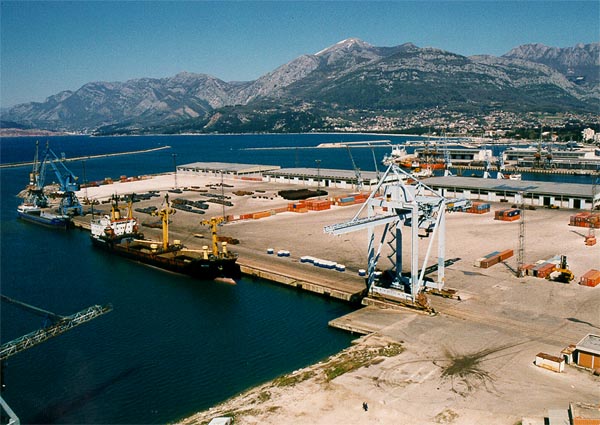
Port of Bar, Montenegro: CGCO Pre-Privatisation Project

Ministry of Maritime Affairs and Transport of Montenegro intends using the proceeds of a loan from the European Bank for Reconstruction and Development (the “Bank”) for a project to facilitate privatisation of the Container Terminal and General Cargo JSC Bar. The proposed project, which has a total estimated cost of approximately EUR 10.7 million equivalent, will require the procurement of the following goods and services:

* New Mobile Harbour Crane and 1-2 Container Reach Stackers; and
* Advisory consultancy services.

Tendering for consulting services is expected to begin in the fourth quarter of 2010 and for the goods in the first quarter of 2011.

Contracts to be financed with the proceeds of a loan from the Bank will be subject to the Bank's Procurement Policies and Rules and will be open to firms from any country. The proceeds of the Bank's loan will not be used for the purpose of any payment to persons or entities, of for any import of goods, if such payment or import is prohibited by a decision of the United Nations Security Council taken under Chapter VII of the Charter of the United Nations or under a law of official regulation of the Purchaser's country.


News source: EBRD link: article

EBRD funds road modernisation in Romania

The EBRD is supporting further modernisation of the transport infrastructure in Romania with a loan of up to €11.5 million to finance the upgrade of the road system in the city of Sibiu, one of the most important cultural centres in the country and a major transport hub in central Romania.
The proceeds of the loan extended to the municipality of Sibiu will be used to finance the rehabilitation of a number of roads in the city, including the renewal of asphalt and pedestrian pavements and an upgrade of water and sewage pipelines along the streets. The investment is part of the EBRD’s Urban Road Management and Rehabilitation Framework, aimed at supporting urban road sector reform in Romania.
The project also includes the construction of a new three-lane bridge in Sibiu with access for vehicles, cyclists and pedestrians. It will replace an existing wooden pedestrian bridge and will provide a key connection to the city centre for a large residential neighbourhood, helping to alleviate heavy traffic in the area.

The upgrade of the transport system in Sibiu will ensure a more integrated traffic flow in the city, improve accessibility for local residents and will enable the extension of public transport services in areas currently underserved in the city.
The project will be complemented by grant financing provided by the German Agency for Technical Cooperation for the preparation of performance based management and maintenance of roads (PMMR) contracts, which will be used for further implementation of Sibiu’s street rehabilitation programme. This will ensure a more competitive and efficient approach to managing road infrastructure in Sibiu, which is expected to be replicated in other cities in the country. 


News source EBRD link: article

Friday, October 8, 2010

Serbia, Kazakhstan sign four interstate agreements

Representatives of Serbia and Kazakhstan signed in Astana today a Protocol on cooperation between the two countries´ foreign ministries, an Agreement on the abolishment of visas, a Free Trade Agreement and an Agreement on the protection of investments. Presidents of Serbia and Kazakhstan Boris Tadic and Nursultan Nazarbayev respectively agreed at the meeting today that on the grounds of traditional friendship, these two countries might improve economic cooperation in many forms in the near future.

Tadic said that the Serbian embassy will soon be opened in this Central Asian country and that the Serbian parliament will initiate the formation of a group of friendship with Kazakhstan. After meeting the Kazakh President, Tadic also had talks with the country’s Prime Minister Karim Masimov and President of the parliament’s Lower House Ural Muhamedzanov.

The Serbian delegation on this visit to Kazakhstan that is led by President Tadic also includes Minister of Foreign Affairs Vuk Jeremic, Minister of Trade and Services Slobodan Milosavljevic and President of the Serbian Chamber of Commerce Milos Bugarin. Bugarin signed an Agreement today on cooperation between the chambers of commerce with President of the Kazakh Chamber of Commerce Tatjana Kononova. A summit of heads of OSCE member states will be organised in Astana in December, which the Serbian President will attend.


News source: EMG.rs link: article

RWE: Nabucco Decision No Earlier than 2011

German utility RWE AG Friday said a decision on whether to invest in the European Union-backed Nabucco natural gas pipeline will be made only in 2011.
"In light of the still pending gas supply contracts the original schedule can't be met" said an RWE spokesman, confirming a statement by Michael Ulbrich, an executive at OMV AG (OMV.VI) with responsibility for pipeline projects.

Ulbrich told Austrian newspaper Der Standard: "This year we certainly won't make it, it will be in 2011."
The shareholders in Nabucco, which is slated to carry Caspian region gas 3,000 kilometers to Western Europe, are Botas (Turkey), Bulgarian Energy Holding (Bulgaria), MOL (Hungary), OMV (Austria), RWE (Germany), Transgaz (Romania), each holding an equal share of 16.67%.
The European Union puts high hopes in Nabucco for effecting the much-vaunted European South Energy Corridor in a bid to ensure the security of gas deliveries to Europe and decrease dependence on Russia. It is seen as a rival to the South Stream gas pipeline project sponsored by Russia, to which Bulgaria is a also a party.


News source: Novinite.com link: article