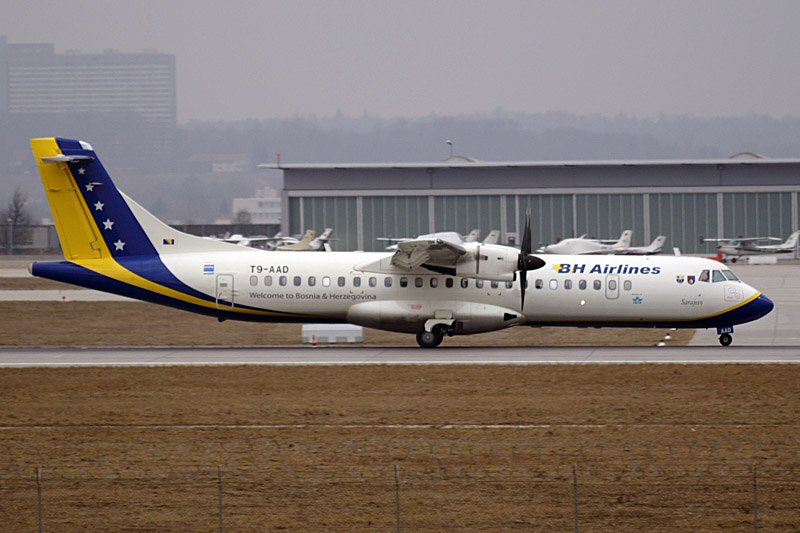
The Tax Administration of Republika Srpska has launched an initiative for launching bankruptcy procedures at 34 enterprises whose combined tax debt amounts to BAM 102.1 million, it was announced yesterday.
The Administration has decided to take this step with the aim of protecting Republika Srpska’ tax claims, saying it will implement this measure in the future, as well, with those taxpayers for which this is the last resort because all other methods of collection had been exhausted.
The biggest five tax debtors in RS include Novoteks Darko Produkt, Dobojputevi, Ekstra trgovina and Kekerovic Company.
News source: Limun.hr link: article
Showing posts with label Bosnia and Herzegovina. Show all posts
Tuesday, December 21, 2010
BiH: Bankruptcy for 34 over BAM 102m tax debt
Friday, December 17, 2010
Bosnia urged to shake Up Uncompetitive Economy
Bosnia’s economy is the least competitive in the Western Balkans and authorities must take urgent action to address the problem, business community warns. Bosnia is a "complicated and complex environment in which to do business... we have not seen a lot of progress in this area over recent years," the head of the World Bank mission in Bosnia, Marco Mantovanelli, said. "This economy is least attractive for an investor in the region," he added, urging the authorities to act "to improve the business environment and the overall competitiveness of the economy". In its recently published Global Competitiveness Report, which ranks countries against 111 different indicators, the World Economic Forum ranked Bosnia in 102nd place out of 139 economies observed.
The World Bank’s 2010-2011 "Doing Business" report ranked Bosnia in 110th place out of 183 countries in the survey. Mantovanelli highlighted the time and cost needed to register a business or to obtain a construction permit as worrying. Simplification of red tape should be a priority for Bosnia’s new state and entity governments, which are yet to be formed following October general elections, Mantovanelli said. This will not solve all the problems, but "it does not require a lot of funds... [and] is a necessary ingredient in the recipe for job creation in this country," he added. High payroll tax, equalling 69 per cent of a salary, is also cited a key impediments to job creation in Bosnia that also scares away potential investors. "Entrepreneurs in Bosnia cannot progress while being forced to carry such a huge burden... but the authorities do not talk to us about our needs," Remzo Baksic, from the Bosnian association of employers, said.
"They only talk to us when they want to show to some international organization that they consult with business community... but nothing ever comes out of it," he added. Representatives of the Foreign Investors Council, FIC, agree with Baksic's observation and stress that Bosnian authorities mostly fail to take business opinions into account. The FIC’s Sead Miljkovic said the council annually sends the authorities recommendations to make the country more business friendly, but they are usually ignored. Miljkovic said the FIC respects the fact that Bosnia has to deal with a complex administrative setup, including separate governments in the two autonomous entities, as well as a central government, linking the two, but this was not an excuse for the failure to resolve “purely technical” problems. "We understand that the country’s legal and political system is fragmented so we focus on technical issues... but there is no response," he said. "Capital is like a river; when it reaches a barrier, it changes course," he warned.
Miljkovic said the authorities had already adopted numerous development strategies and projects but these mostly gather dust in a government drawer. "We constantly hear talk about Bosnia’s competitive advantages in the energy sector but not one serious development project was implemented in this sector in the past 20 years," he noted. Continued neglect of problems faced by the business community can only result in further job losses, at a time when official unemployment rate is over 40 per cent, the owner of the country’s leading construction company, Faruk Sirbegovic, said. "The authorities know what needs to be done, we do not need new strategies,” Sirbegovic added. “They should just take out the old strategies, update them a bit if needed and start working".
News source Balkan Insight link: article
Wednesday, December 15, 2010
Bosnians cheer as EU Visa-Free regime takes effect
Bosnians joined an open-air party on Tuesday night to celebrate their newly achieved visa-free regime with the EU after twenty years of long queues in front of western embassies. “We felt like second-rate citizens for too long, but that is over now,” Sabina Curcic, 54, said with a wide grin during the celebration organised in the central square in Sarajevo only a few hours before the visa-free regime came into effect at midnight. Shouting over the noise of fireworks and singers performing on a stage erected for the occasion, 23-year-old Mirza exclaimed: “no more humiliation in front of embassies, freedom at last!” Addressing the celebration, Bosnia’s Security Minister Sadik Ahmetovic said the day when visa requirements were lifted “will be remembered for generations”.
However, he again urged citizens not to abuse the new regime, a growing concern in the EU after thousands of Macedonians and Serbians sought asylum in member states of the bloc in the months after visas were lifted for their countries last December. A group of some 50 youngsters, who boarded a bus in Sarajevo just before midnight on Tuesday to travel to a concert in Slovenia, will most likely be the country’s first citizens to enter the EU without visas. Smiling and waving their biometric Bosnian passports, the teenagers happily got on the bus, which was to make stops in Banja Luka and Bihac to collect more passengers. Under the EU decision, some four million Bosnian citizens are now allowed to travel using biometric passports to a total of 28 nations that are either inside Europe’s borderless Schengen zone or aspire to join it.
Tanja Fajon, a Slovenian member of the European Parliament who has been the leading advocate of EU visa liberalisation for Bosnia, also welcomed the “very important step” the county has taken towards Europe. “This (lifting of visa requirements) is proof that Bosnia-Herzegovina is not only a part of Europe, but I believe it will soon be a part of the European Union,” Fajon told journalists in Sarajevo. Bosnia’s international administrator Valentin Inzko also welcomed the end of the country’s isolation after its authorities had met a long list of requirements imposed by the EU. “The objective was to secure real benefits for Bosnia-Herzegovina citizens by implementing ambitious but sensible reforms – and that is what has been done,” Inzko said. “The same model can now be applied to a whole range of reforms that will take Bosnia and Herzegovina towards the European Union,” he added.
News source: Balkan Insight link: article
GDP per inhabitant in the Member States ranged from 44% to 271% of the EU27 average in 2009
In 2009, the Gross Domestic Product (GDP) per inhabitant in Luxembourg, expressed in purchasing power standards (PPS), was more than two and a half times the EU27 average, while the Netherlands recorded a level more than 30% above the average. Ireland, Austria and Denmark were between 20% and 30% above the EU27 average, while Sweden, Germany, Belgium, Finland and the United Kingdom were between 10% and 20% above average.
France, Italy and Spain registered GDP per inhabitant between 0% and 10% above the EU27 average, while Cyprus and Greece were between 0% and 10% below the average. Slovenia, the Czech Republic, Portugal, Malta and Slovakia were between 10% and 30% lower than the EU27 average. Hungary, Estonia, Poland, Lithuania and Latvia were between 30% and 50% lower, while Romania and Bulgaria were between 50% and 60% below the EU27 average. These data for 2009, 2008 and 2007, published by Eurostat, the statistical office of the European Union, are based on revised4 purchasing power parities, and the latest GDP and population figures. They cover the 27 EU Member States, three EFTA Member States, three EU Candidate Countries and four Western Balkan countries.
News source: Eurostat link: publication
Labels:
Albania,
Balkan,
Bosnia and Herzegovina,
Bulgaria,
economy,
EU,
EU27,
EU271,
Eurostat,
GDP,
Gross domestic product,
Montenegro,
Romania,
Serbia
Monday, December 13, 2010
FIPA: foreign investments down by 20 per cent
Based on the records of the Foreign Investment Promotion Agency (FIPA), foreigners invested around EUR 177 million in BH is the first three quarters of 2010, which was by 22 per cent less in comparison with the same period of 2009.
Despite this slowdown, it is encouraging that foreigners invested in production the most – 46 per cent of FDI in this period. Furthermore, 22 per cent was invested in shopping centres and ten per cent on the financial sector. Increased FDIs at the annual level were reported for tourism (nine per cent of total FDI) and real estate (six-percent share).
FIPA expects bigger FDI in the following year, based on the implementation of several announced projects.
News source: Limun.hr link: article
Despite this slowdown, it is encouraging that foreigners invested in production the most – 46 per cent of FDI in this period. Furthermore, 22 per cent was invested in shopping centres and ten per cent on the financial sector. Increased FDIs at the annual level were reported for tourism (nine per cent of total FDI) and real estate (six-percent share).
FIPA expects bigger FDI in the following year, based on the implementation of several announced projects.
News source: Limun.hr link: article
Friday, December 10, 2010
Commission launches Strategy to boost development of the Danube Region
The European Commission has today presented its proposal for an EU Strategy for the Danube Region and its 115 million inhabitants. This initiative seeks to develop the huge economic potential and improve environmental conditions of the region. By establishing a framework for long-term cooperation on a wide range of issues, the Strategy will play a key role in improving sustainable transport, linking energy systems, protecting the environment, preserving water resources and stimulating the business climate. With its focus on sustainable growth, it will also make an important contribution to achieving the Europe 2020 goals. The Strategy will bring added value, by ensuring coherence between different policy areas, and greater coordination between participating states. While there are no new funds for implementation of the Strategy, closer alignment of programmes adopted by the Danube states should mean that the €100 billion available to the region in the current financial period achieves greater impact. This Strategy proposes the EU's second only "macro-region", following the creation of the EU macro region in the Baltic Sea area.
European Commissioner for Regional Policy Johannes Hahn said: "During the consultation period the Danube states have shown their commitment to the creation of a new macro-region at the highest level. The Strategy and Action Plan we are proposing are based on over 800 submissions from the Region itself. By focusing on the most important issues, such as mobility, energy, pollution, jobs and security, I am convinced that the Strategy will make a real contribution to building a better future for this part of Europe. This second EU macro region will play an important part in pioneering this form of co operation. I am convinced that the macro-regional approach can bring excellent results, as we are already seeing in the Baltic Sea Region.''
The Danube Region encompasses 14 countries (of which 8 are EU Member States) ranging from Germany in the West to the Ukraine in the East. It faces challenges including untapped shipping potential, lack of road and rail connections, uncoordinated efforts in education, research and innovation, and environmental threats. The recent disaster of the toxic sludge spill in Hungary is a clear illustration of the need to work together beyond borders to prevent spread of pollution and combat effects of such catastrophes.
Given the inter-linked nature of many of these challenges, cooperation within a 'macro-regional' framework, is intended to produce more effective coordination. This approach does not imply new laws or institutions but rather strengthens links between different policies and between a wide range of stakeholders. It aims to serve the interest of the region as a whole while taking into account its diversity. Although the Strategy will not come with extra EU finance, a considerable amount of funding is already available to the region through a host of EU programmes. The aim is to use this available support – € 100 billion alone has been allocated from the cohesion policy (European Regional Development Fund, Cohesion Fund, European Social Fund) between 2007 and 2013 – to greater effect and show how macro-regional cooperation can help tackle local problems.
The Strategy contains a detailed action plan based around four pillars:
* Connecting the Danube Region (e.g. improving mobility, encouraging sustainable energy and promoting culture and tourism)
* Protecting the environment in the Danube Region (e.g. restoring water quality, managing environmental risks and preserving biodiversity)
* Building prosperity in the Danube Region (e.g. developing research capacity, education and information technologies, supporting the competitiveness of enterprises and investing in people’s skills)
* Strengthening the Danube Region (e.g. stepping up institutional capacity and improving cooperation to tackle organised crime)
The Strategy is open-ended, but includes a number of time-limited targets, to mobilise effort, including:
* increasing cargo transport on the Danube by 20% by 2020
* reduce nutrients to restore eco-systems of the Black Sea to 1960 levels by 2020
* bring broadband fast-speed internet access to all EU citizens in the region by 2013
* secure a viable population of Danube sturgeons by 2020
To achieve the targets, the strategy lists a series of actions which will also make an important contribution to achieving the broader Europe 2020 goals for sustainable and smart growth. Examples include: the modernisation of the fleet of ships for the rivers; construction of two bridges over the river between Romania and Bulgaria; promotion of the Danube region as a tourist destination; building of waste water treatment plants where required; establishment of joint research centres, and; improvement of living conditions of Roma communities.
News source: EU Press Room link: article
Thursday, December 9, 2010
Strengthening Inter-Municipal and Economic Co-operation in the Podrinje Region
Despite possessing a wealth of potential and possibilities, co-operation between municipalities and small-and-medium sized enterprises (SMEs) within what can broadly be defined as the Podrinje region remains under-developed and under-exploited. Accordingly, this project aims to stimulate economic trade and municipal ties between Republika Srpska and Serbia by strengthening the capacity of SMEs and municipal officials to understand and contend with the specific challenges and practicalities of regional co-operation.
This project will encourage regional co-operation by providing mechanisms through which municipalities and SMEs can work to identify and develop shared solutions to specific problems facing the Podrinje region, including its comparative remoteness from national markets, poor transport and economic infrastructure, high levels of reported and unregistered unemployment, and relatively low income levels; problems which have previously impeded the region’s sustainable development.
By helping to build regional networks that facilitate exchanges of information, knowledge and innovate practices, meanwhile, this project will help expand the access that SMEs have to alternative markets by providing a framework both to establish contacts with potential partners and to become better acquainted with the respective markets, legislative frameworks and customs regimes. In promoting inter-municipal and SME co-operation, this project will therefore contribute to improving the region’s economic competitiveness and socio-economic cohesiveness, whilst simultaneously creating new employment and investment opportunities. With the potential for regional co-operation also extending to tourism, cultural exchanges and co-operation between education/training centres, this project will also strengthen co-operation amongst local communities throughout the Podrinje region.
The ‘Strengthening Inter-Municipal and Economic Co-operation in the Podrinje Region’ is composed of a variety of events and activities, combined with on-going networking and best practice exchange elements, intended to contribute to the project’s long-term sustainability and the realisation of joint initiatives, particularly between municipalities. Throughout the project, the participating municipalities, SMEs and other counterparts will work to elaborate strategies for further developing and facilitating regional trade and co-operation. Ultimately, this project will enable municipal authorities to prepare joint project proposals that will help secure additional capital financing for projects that tackle concrete problems inhibiting regional trade, such as those related to transport and communications infrastructure, a lack of economic and low levels of investment in human capital.
This project will encourage regional co-operation by providing mechanisms through which municipalities and SMEs can work to identify and develop shared solutions to specific problems facing the Podrinje region, including its comparative remoteness from national markets, poor transport and economic infrastructure, high levels of reported and unregistered unemployment, and relatively low income levels; problems which have previously impeded the region’s sustainable development.
By helping to build regional networks that facilitate exchanges of information, knowledge and innovate practices, meanwhile, this project will help expand the access that SMEs have to alternative markets by providing a framework both to establish contacts with potential partners and to become better acquainted with the respective markets, legislative frameworks and customs regimes. In promoting inter-municipal and SME co-operation, this project will therefore contribute to improving the region’s economic competitiveness and socio-economic cohesiveness, whilst simultaneously creating new employment and investment opportunities. With the potential for regional co-operation also extending to tourism, cultural exchanges and co-operation between education/training centres, this project will also strengthen co-operation amongst local communities throughout the Podrinje region.
The ‘Strengthening Inter-Municipal and Economic Co-operation in the Podrinje Region’ is composed of a variety of events and activities, combined with on-going networking and best practice exchange elements, intended to contribute to the project’s long-term sustainability and the realisation of joint initiatives, particularly between municipalities. Throughout the project, the participating municipalities, SMEs and other counterparts will work to elaborate strategies for further developing and facilitating regional trade and co-operation. Ultimately, this project will enable municipal authorities to prepare joint project proposals that will help secure additional capital financing for projects that tackle concrete problems inhibiting regional trade, such as those related to transport and communications infrastructure, a lack of economic and low levels of investment in human capital.
Goal of the project
The goal of this project, implemented in conjunction with the Representational Office of Republika Srpska in Belgrade, is to promote and facilitate economic and inter-municipal co-operation between Republika Srpska and Serbia by strengthening the skills and knowledge of municipal officials and small-and-medium enterprises (SMEs) from municipalities throughout the Podrinje region
News source: Transconflict link: article
Monday, December 6, 2010
WTO Secretariat reports drop in anti-dumping investigations and measures
The WTO Secretariat reported that during the period 1 January — 30 June 2010, the number of initiations of new anti-dumping investigations showed a 29% decrease compared with the corresponding period of 2009. The number of new measures applied also decreased during the first semester of 2010 when compared with the first half of 2009. In particular, during January — June 2010, 19 WTO Members reported initiating a total of 69 new investigations, compared with 97 new investigations reported by 18 WTO Members for the corresponding period of 2009. A total of 14 Members reported applying 59 new anti-dumping measures during the first semester of 2010, with a decrease of 5% than the 62 new measures reported by 16 Members for the corresponding period of 2009. Fifteen new investigations were opened by developed Members and 10 out of 59 new final measures were applied by developed Members during the first half of 2010. This compares with 15 new investigations begun and 15 new measures applied by developed Members during the first half of 2009.
The Members reporting the highest number of new initiations during January — June 2010 were India, reporting 17 new initiations, followed by the European Union, reporting 8 new initiations, Argentina (7), Brazil and Israel (5 each). Other Members reporting initiations were Australia and China (4 each), Indonesia and Korea (3 each), Colombia, Thailand and the United States (2 each), and Canada, Chile, Jamaica, Mexico, Chinese Taipei, Turkey and Ukraine (1 each). These figures represented increases for India, the European Union, Brazil and Israel, and declines for Argentina, China, Indonesia, Colombia, the United States, Canada, Turkey and Ukraine. The number of initiations by Australia and Mexico remained unchanged compared with the numbers reported for January — June 2009. Chile, Jamaica, Korea, Chinese Taipei and Thailand, which did not report new initiations for January — June 2009, reported new initiations for the first semester of 2010, while Costa Rica, Pakistan, Peru and South Africa, which reported new initiations for the first half of 2009, did not report new initiations for the first half of 2010.
During the first half of 2010, China was the most frequent subject of the new investigations, with 23 new initiations directed at its exports. This was a 30% decrease from the 33 new investigations opened in respect of exports from China during January — June 2009. The European Union (including individual member States) was next with 11 new investigations directed at its exports, followed by the United States (5), Korea and Thailand (4 each), Malaysia and Chinese Taipei (3 each), Brazil and Japan (2 each), and Belarus, Bosnia & Herzegovina, Chile, Dominican Republic, India, Indonesia, Mexico, Norway, Singapore, South Africa, Ukraine, and Vietnam (one each).
The products most frequently affected by these new investigations during the first half of 2010 were in the base metals sector (20 initiations), the chemicals sector (11 initiations), the plastics and rubber sector (7 initiations) and the plaster and ceramic products sector (6 initiations). Of the 20 reported initiations relating to the base metals sector, 6 were reported by India, 3 by Indonesia, two each by Colombia, the European Union, Thailand and the United States, and one each by Argentina, Israel and Korea.
IMF Executive Board concludes 2010 Article IV Consultation with Bosnia and Herzegovina
After several years of strong growth, increasingly accompanied by external and internal imbalances, the economy of Bosnia and Herzegovina fell into recession in 2009. Like elsewhere in the region, Bosnia and Herzegovina’s pre-crisis growth relied on booming domestic demand financed from abroad. Sharp increases in government spending on wages and social transfers in 2008 added to demand pressures, which manifested in widening current account deficits and a spike in inflation. The global economic and financial crisis triggered a collapse in the demand for Bosnia and Herzegovina’s exports and severely curtailed cross-border financial inflows. Private investment and spending on consumer durables collapsed, while private consumption softened to a lesser extent, on the back of moderate growth of wages and social benefits. The pre-crisis credit boom came to a sudden stop.
Faced with increasing financing pressures in early 2009, the authorities put together a comprehensive program supported by an IMF Stand-By Arrangement. The program was designed to safeguard the currency board and cushion the effects of the deteriorating external environment, while adopting policies to redress fiscal imbalances and strengthen the financial sector. The authorities’ approach included: gradual fiscal consolidation accompanied by structural fiscal reforms to bring public finances on a sustainable path; steps to strengthen the resilience of the financial sector alongside commitments from foreign parent banks to maintain their exposures to BiH and keep their subsidiaries capitalized; and substantial financing from the IMF along with funds from the World Bank and the European Union (EU).
Bosnia and Herzegovina’s stabilization program has helped mitigate the impact of the global financial crisis on the economy. The IMF’s financial support package has helped minimize the impact of revenue shortfalls on government spending, thus limiting output losses. It has also helped stem the loss of foreign reserves by the central bank and shore up investor confidence. Confidence building steps, including Bosnia and Herzegovina’s participation in the European Bank Coordination Initiative, and the increase of the scope and limit of deposit insurance coverage helped restore depositors’ confidence in the banking system. Performance under the program has been encouraging: fiscal restraint is addressing large imbalances of recent years and structural fiscal reforms have advanced, albeit at a slower pace than initially envisaged.
The economy appears to have bottomed out and is projected to stage a modest recovery in 2010, paving the way for a rebound in 2011. Domestic demand will remain subdued, held in check by stagnant real wages and ongoing fiscal consolidation. This will contribute to a further narrowing of the current account deficit. Underlying inflation is projected to remain low. Private sector credit will pick-up slowly, as banks have yet to absorb the full losses due to non-performing loans in their portfolios. The program targets a general government deficit of 4.5 percent of Gross Domestic Product (GDP) in 2010.
Friday, December 3, 2010
Bosnia 'neglecting potential' to become agriculture power
While a new study says Bosnia could feed itself and other countries, local experts lament that the sector is being left to rot. Farming experts say Bosnia and Herzegovina is letting slip a vital chance to become one of the Europe's bread-baskets. According to a World Bank study published this week, the good climactic conditions and low land and labour prices are more favourable for farming than anywhere elsewhere in southern Europe. Combined with relatively low shipping costs, they should make Bosnia’s agriculture “well positioned to compete on the export markets,” the study found.
But domestic experts say the sector is languishing as a result of a broad range of constraints, including fragmented supply chains, costly logistics and limited access to affordable finance.
The country is also failing to capitalize on its preferential trade agreements with EU member countries because a range of its products are banned from foreign markets owing to the absence of proper food safety institutions, they say.
“Development strategies recognise agriculture as a key economic sector but the authorities are failing to take action to assist this development,” an agronomy expert from the Banja Luka Faculty of Agriculture, Zeljko Vasko, told Balkan Insight. Public spending in Bosnian agriculture remains low, at around 2 per cent of total public spending, and funds are not targeted toward areas that generate most growth. "Everyone says that agriculture can solve many of our economic problems but the authorities do not do anything to make it happen," Aleksandra Nikolic, from the Sarajevo agriculture faculty, said. "It would take a sociologist to explain this," she added. "Maybe they believe it can happen on its own without investment and without any effort on the part of the government." Nikolic said the proper development of the farming sector was also being prevented by unclear distribution of authority in the country coupled with the influence of “centres of power outside the government.”
As an example of the current muddle, she said the Food Safety Agency, which among other things monitors the work of the government, is having to write farming by-laws because the country does not have an agriculture ministry to do it.
Agriculture in Bosnia falls under jurisdiction of the country’s two highly autonomous parts, the Serb-dominated Republika Srpska and the Federation, predominantly comprised of Bosniaks [Muslims] and Croats. The central government, linking the two, does not even have an agriculture ministry. Farms provide employment for about 20 per cent of all those working in the country. But Vasko warned that most were rural and poor, producing for their own consumption and lacking the capital, the ambition and the institutional support to switch to commercial farming. At the moment, the average Bosnian farm is two hectares is size, subdivided into between six and eight plots, and this fragmentation hampers productivity and investment in irrigation and equipment.
"Radical change is urgently needed in this sector, including concentration of land and other resources in the hands of the people who will make it their core business," Vasko said. Until that happens, “We will continue to eat vegetables imported from neighbouring countries and meat from who knows where while the local produce is left to rot,” he added. According to World Bank data, the participation of the agri-food sector in Bosnia’s Gross Domestic Product dropped to 9.8 per cent in 2007 from 15.1 per cent in 1999. Food imports are growing faster than food exports and as a result the agriculture-food trade deficit increased by over 10 per cent between 2003 and 2007. “A lot of our problems are also due to a lack of knowledge, because the people who are now in control were educated in the old [Yugoslav Socialist] system and do not understand what kind of regulation modern commercial farming requires,” Nikolic said.
News source: BalkanInsight link: article
Thursday, December 2, 2010
Memorandum of understanding between the Agency for Statistics of Bosnia and Herzegovina and the Statistical Office of the Republic of Slovenia
Today in Sarajevo SORS’s Director-General Ms. Irena Križman and Director of the Agency for Statistics of Bosnia and Herzegovina Mr. Zdenko Milinović signed a memorandum of understanding on cooperation in the area of statistics.
For several years the Statistical Office of the Republic of Slovenia has been very active internationally, offering professional assistance in the field of statistics, especially to Western Balkan countries. On the basis of previous successful statistical cooperation, SORS and the Agency for Statistics of Bosnia and Herzegovina decided to sign a memorandum of understanding on cooperation in the area of statistics.
This memorandum establishes a general framework and conditions for co-operation between the two offices in development and enhancement of the statistical systems, qualitative progress of statistical methodologies, statistical surveys and better comprehension of statistical results, and exchange of experience and knowledge in all areas of statistical activities. Among other things, the cooperation will cover:
- exchange of information and experience within the scope of statistical methodologies, policies and governance,
- exchange of experts and specialists, and
- organization of courses, seminars, consultations, study visits and similar activities.
News source: Statistical Office of the Republic of Slovenia link: article
Tuesday, November 30, 2010
Bosnia: MF Banka raises capital by 30%
The Banja Luka bourse said on Friday that Bosnia's MF Banka has raised its capital by 6.0m marka ($4.1m/3.1m euro) to 26 million marka through a new share issue. The bourse said in a statement on its website the bank's capital was raised through the placement of 60,000 new shares with a par value of 100 marka each and the increased capital is now divided into 260,000 shares of the same par value.
No further details were immediately available.In July, Bosnian microfinance institution Mikrofin bought local Russian-owned bank IEFK Banka. It renamed it to MF Banka in August.
News source: Balkan.com link: article
Labels:
Balkan,
Bosnia and Herzegovina,
capital,
economy,
MF Banka,
new shares,
raise
Friday, November 26, 2010
B&H delays Amsterdam launch
B&H Airlines has delayed the launch of its much publicised Sarajevo – Amsterdam service. The flights, which were supposed to be inaugurated on December 02, have been deferred until December 16. Flight times have not been altered. However, the Bosnian national carrier will operate the service every Tuesday, Thursday and Sunday instead of Tuesday, Thursday and Saturday. The route will operate with an Airbus A319. All flight details can be found on the right hand side in the new route launches section.
Bookings for the new route have been going well in the lead up to the holiday season. Schengen zone visa restrictions for Bosnian passport holders will come to an end on December 15, which could be one of the reasons for the delay, although no official word has been given as for the reason behind the deferral. B&H is no stranger to cancelations and delays.
News source: EX-YU Aviation link: article
Bookings for the new route have been going well in the lead up to the holiday season. Schengen zone visa restrictions for Bosnian passport holders will come to an end on December 15, which could be one of the reasons for the delay, although no official word has been given as for the reason behind the deferral. B&H is no stranger to cancelations and delays.
News source: EX-YU Aviation link: article
Thursday, November 25, 2010
Sarajevo International airport plans to expand existing passenger terminal to 17,000 sq meters
PC Sarajevo International Airport LLC (“SIA”) has signed a Loan Agreement in the amount of 25.000.000,00 EUR with the European Bank for Reconstruction and Development (“EBRD” or the “Bank”) which will be used to finance the three key components of the project:
(a) expansion of the passenger terminal;
(b) expansion of the apron;
(c) upgrading the taxiway system.
As part of the project the existing passenger terminal would be expanded from 9,000 square meters to 17,000 square meters. This would allow 17 square meters per passengers at peak hours, which is consistent with the European norms. The extension to the passenger terminal building will serve an additional 4 stands on the apron extension for aircraft ICAO code C and D. The expansion is not only required to meet increasing passenger movements, but also to address the need for additional space arising from enhanced security procedures and to expand commercial facilities, and most importantly, to prepare SIA for Bosnia and Herzegovina’s entry into Schengen zone.
The objective of this assignment is to facilitate the timely and effective implementation of the Project, by procuring the services of a consulting firm to provide assistance and advice to SIA on procurement, tender document review, tender evaluation, contracting and contract implementation and administration, reporting to the Lenders and general support for implementation of the works. The Consultant shall provide permanent liaison with, and assistance to SIA in overall project management, providing guidance on structural planning including the assurance that suitable controls and organizational systems are put in place to effectively manage cost related issues of the project, provide advice on project planning, assistance in general coordination and monitoring of project activities and prepare proposals for relevant decision-making at milestones of the project cycle.
The Consultant will also act as “the Engineer” for Supervision of Works and related contracts to be implemented under the project. Particular attention shall be paid to the harmonization, interfacing and time linkages between the different contracts. The Consultant shall facilitate a process whereby goods, works and services financed by the Lenders’ loans are procured in a timely manner according to technically sound and economically efficient procedures, specifications and documentation, and in compliance with the EBRD’s Procurement Policies and Rules and any other covenants in the loan agreements between the Airport and the Lenders.
EBRD steps up investment in Croatia’s transport infrastructure
The EBRD is supporting the further modernisation of transport infrastructure in Croatia with a loan of up to €60.6 million to Hrvatske Autoceste, the Croatian motorway company, guaranteed by the Republic of Croatia. The EBRD funds will finance the construction of motorway sections of the Corridor Vc, a major transportation route stretching from the Hungarian capital of Budapest to the Croatian port of Ploce, via eastern Croatia and Bosnia and Herzegovina.
The project complements the EBRD’s existing funding of the Corridor Vc in Bosnia and Herzegovina and Hungary and supports institutional strengthening of Hrvatske Autoceste through adoption and implementation of an improved procurement policy which is in line with best practice. The EBRD places a high priority on developing these transport links that bolster economic development by supporting cross-border trade. Promoting good corporate governance in terms of improving the policies and practices of its clients is also a key objective of the Bank.
The loan will be used to complete the Croatian part of the motorway by building some 13 kilometres of motorway sections that will connect the northern and southern ends of the Bosnia-Herzegovina part of the Corrridor Vc at Croatia’s border. The project is supported by technical assistance funding from the Bank’s Shareholders Special Fund. The grants will be used to support increased commercialisation of tolling and maintenance activities at Hrvatske Autoceste. In addition, grants will be used to strengthen corporate governance by supporting the development of a new procurement policy and defining a project management methodology. This is expected to lead to well defined roles, responsibilities, controls, processes and reporting rules for the implementation of Hrvatske Autoceste’s investment programme, allowing for a high level of supervision and monitoring.
The project is expected to be co-financed by a matching loan from the European Investment Bank. “The EBRD’s investment will support the expansion of the motorway network in Croatia, increasing the country’s regional integration. It will also enhance further institutional strengthening of Hrvatske Autoceste and of the Company’s management systems”, said Sue Barrett, EBRD Transport Team Director. “This is an important project for Croatia, but also for the region, linking the Corridor Vc with the country’s motorways network at the borders with Bosnia and Herzegovina. Upon completion Corridor Vc will be the fastest connection between the north eastern and southern Croatia, the most direct route from central Europe to the Adriatic and will greatly improve Croatia’s transport links with neighbouring countries”, said Zsuzsanna Hargitai, EBRD Director for Croatia. Since its first investment in the Croatian motorways in 2001, the EBRD has committed to date over €400 million for the modernisation of Croatia’s transport sector. Overall the Bank has invested more than €2.35 billion in various sectors of Croatian economy.
Labels:
Balkan,
Bosnia and Herzegovina,
Budapest,
Corridor Vc,
Croatia,
Croatian motorway company,
Croatian port of Ploce,
EBRD,
Hrvatske Autoceste,
loan,
modernisation,
transport infrastructure
Subscribe to:
Posts (Atom)